Centrifugal cast straight radiant tube
Centrifugal cast straight radiant tube
The structure of the straight tube radiant tube: a burner is installed at one end of the straight tube, the gas burns in the tube after the burner is ignited, and the exhaust gas generated by the combustion is discharged from the other end of the tube. The advantage of this type of radiant tube is that the structure is relatively simple,…
CONTACT
Share To:


Product Introduction
The structure of the straight tube radiant tube: a burner is installed at one end of the straight tube, the gas burns in the tube after the burner is ignited, and the exhaust gas generated by the combustion is discharged from the other end of the tube.
The advantage of this type of radiant tube is that the structure is relatively simple, and the disadvantage is that the temperature distribution uniformity on the surface of the tube wall is poor and the thermal efficiency is low. In the case of stuffy furnace or shutdown,
heat loss will be caused by natural ventilation. On high-temperature industrial furnaces, heat-resistant ceramic material radiant tubes can be used. Two straight-through radiant tubes can be used in pairs.
A waste heat recovery device is installed at the outlet of one tube,
and the other radiant tube preheats the air required for combustion, which can not only improve the temperature distribution of the tube wall surface of the radiant tube, but also improve Thermal efficiency, but inconvenient to install and disassemble.
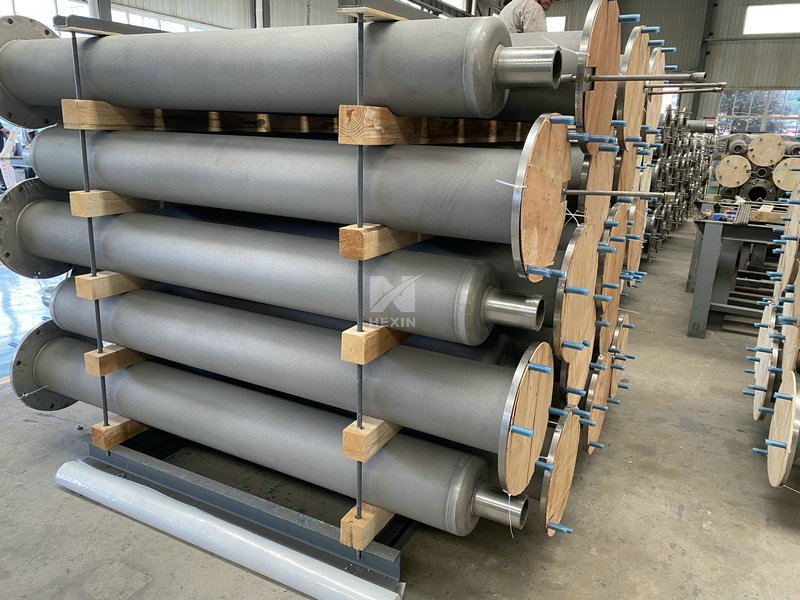
I type radiation tubes wide plate heat treatment furnace radiation pipes used for normalizing furnace, quenching furnace, under protective atmosphere of nitrogen and hydrogen, the furnace temperature is about 500 to 900 ℃, through the heating mode of the burner. Radiant tube by centrifugal casting, under the action of centrifugal force casting the molten steel was casted into a variety of tube. boring hole with the boring machine, welding groove with the lathe machining, and precision casting the bottom end closure.
The main process of the straight tube radiant tube is centrifugal casting. The main straight tube is to inject liquid metal into the high-speed rotating mold, so that the molten metal is centrifugally moved to fill the mold and form a casting.
Due to the centrifugal movement, the liquid metal can fill the mold well in the radial direction and form the free surface of the casting; the cylindrical inner hole can be obtained without a core; it is helpful for the removal of gas and inclusions in the liquid metal;
Influences the crystallization process of metals, thereby improving the mechanical and physical properties of castings.
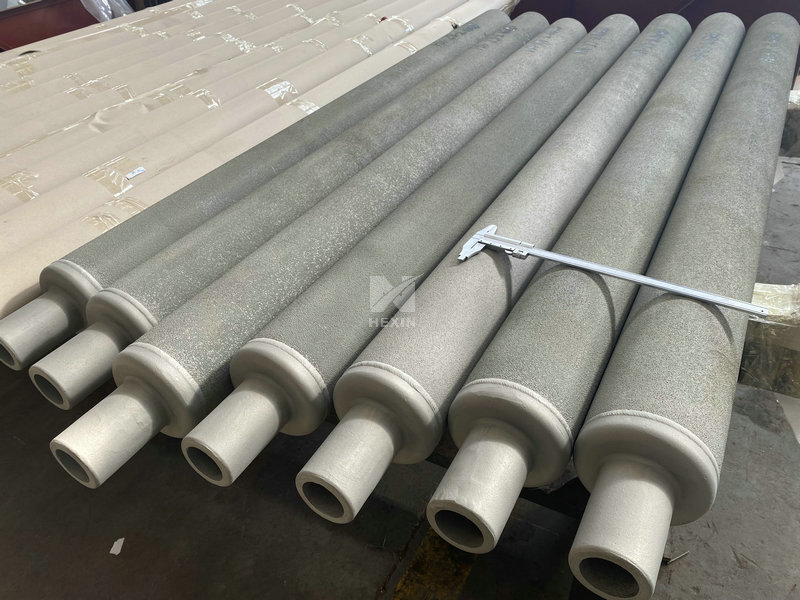
centrifugal cast radiant tube, under the action of centrifugal force casting the molten steel was casted into a variety of tube. boring hole with boring machine , welding groove with the lathe machining, and precision casting the bottom end closure, 100% PT inspection.
straight pipe adopt centrifugal casting technology, liquid steel casted into various types of tube blank under the effort of centrifugal force, according to boring internal hole with boring mill, machining and welding according to the drawing.
Commonly used material isZG40Cr25Ni20Si2 、ZG40Ni35Cr25Nb、ZG45Ni48Cr28W5Si2,1.4848,1.4852,2.4879,Flange made by forging and machining,each step was under the strictly quality control, PT100%,RT,PMI,all these is to make sure the offered radiant tube have long usage life.
2
P type spun cast tube
P-regenerative radiant tube combustion system is a typical single burner heat accumulating type high temperature air combustion system.
The system has the advantages of simple structure, burner for combustion and easy to control, and flue gas recirculation combustion characteristics.
The surface temperature of the P-regenerative radiant tube is more uniform than the conventional radiant tube
the welded radiant tube can adapt to the production environment where continuous heat treatment units can quickly switch furnace temperatures and quickly produce various specifications and types of high-strength steel plates.
Welded radiant tubes can quickly heat up and cool down, reduce the use of transition materials, improve the thermal efficiency of heat treatment furnaces, reduce pollutant emissions, and meet the requirements of green and flexible manufacturing.